Friday, January 2, 2026
AI for Personal Injury Law Firms: A 2026 Field Guide

AI went from novelty to table-stakes in personal injury law somewhere in 2024-2025. The question at most firms in 2026 isn't “should we use AI” — it's “which parts of our practice should AI actually touch, and which parts will get us sanctioned, embarrassed, or outmaneuvered if we let it.”
This is a field guide to the answer. It covers every major workflow where plaintiff firms are deploying AI today, what's working, what isn't, and where to go deeper on each.
The plaintiff firm AI lens
Before getting into specific workflows, a framing that matters.
At a defense firm, AI converting 60% of a motion into auto-drafted prose is directly billable output — the economics are obvious. At a plaintiff firm, the same AI that drafts 60% of a demand letter is only valuable if it reliably moves the case, doesn't introduce errors you'll pay for later, and frees paralegal time for cases closer to settlement.
“Draft faster” isn't the metric. “Settle more, faster, with fewer errors” is.
Keep that test in mind for everything below. Any vendor who can't articulate how their product moves you toward that metric is pitching a feature in search of a problem.
For the longer version of this framing — and the specific case for why plaintiff firms should approach AI differently than either defense firms or big law — see AI for Plaintiff Law Firms: What Actually Works.
Where AI is earning its keep
Five workflows where the ROI is real and the failure modes are manageable. Each links to a deep-dive on the specific workflow.
1. Intake triage
The most consistent win. AI is very good at reading an intake form or first-call transcript, scoring cases against the firm's acceptance criteria, and routing the obvious accepts and rejects to instant decisions. The 20% of cases that actually need paralegal judgment get more attention because they aren't buried under the routine 80%.
Firms running AI triage report cutting time-to-sign on accepted cases from days to hours, plus catching more statute-of-limitations edge cases than an over-burdened intake team would.
The failure modes are bounded: false rejects cost you cases (expensive); false accepts cost you a discovery call (cheap). Set the auto-reject threshold conservatively and the auto-accept threshold aggressively.
Deep dive: AI intake for personal injury firms
2. Medical records review and summarization
The unglamorous, high-value task. AI extracts treatment dates, providers, diagnoses, procedures, and billed amounts from stacks of unstructured medical records at 85-95% accuracy when the records are cleanly scanned. Paralegals go from four hours of PDF flipping to thirty minutes of structured review.
The risk is hallucinated facts. Any AI records tool that doesn't link every extracted fact back to a specific page in a specific source record is a liability. Good tools make source verification fast; bad ones make it impossible.
Deep dive: AI medical records review for personal injury
3. Demand letter drafting
Works if you treat it right. AI can produce a competent first draft from a facts bundle and a damages breakdown in under a minute — saving 1-2 hours of paralegal time per demand. What it cannot do is set the demand number, calibrate tone to a specific adjuster, or handle pre-existing conditions with the legal nuance those sections require.
Firms treating AI as “faster first draft, attorney does the thinking” save hours per demand. Firms treating AI as “press button, send demand” leave settlement value on the table and occasionally get sanctioned over fabricated citations.
Deep dive: AI demand letters for personal injury
4. Client communication at scale
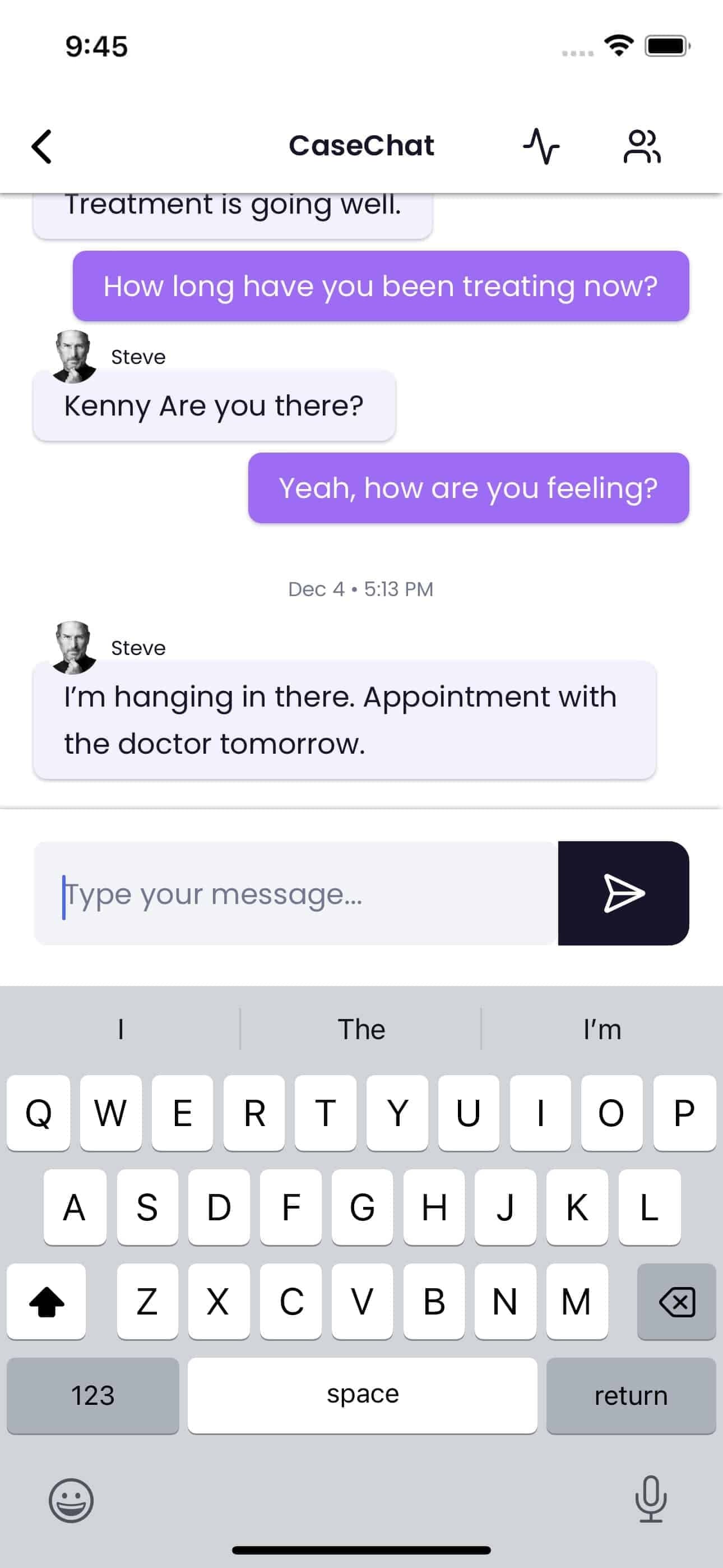
Plaintiff firms live or die by client communication quality. AI drafts case status updates, generates client-specific FAQs, translates legal concepts into plain English, and handles first-response messages during off-hours — without requiring the firm to double its paralegal headcount.
The payoff is measurable: firms that invest in consistent client comms report higher Google review volume and lower pre-settlement client churn. The key is context: AI-drafted messages need to hit the specific client's case state (upcoming appointments, latest treatment, last interaction), not generic templates.
5. Deposition and discovery prep
Quietly becoming a real time-saver. AI reviews the complaint, answers, and key records and produces a deposition outline with specific factual disputes to probe, admissions to target, and exhibits to prepare. The attorney still runs the depo, but outline prep drops from 2-3 hours to 45 minutes of refinement.
The same pattern applies to discovery response drafting: AI handles the mechanical parts (routine objections, boilerplate definitions, record organization) and the attorney focuses on the substantive responses that actually affect the case.
AI is not going to transform a plaintiff firm on its own. What it does is compress the mechanical parts of the practice so your attorneys spend more of the day on the parts that actually win cases.
Where AI is still losing
Equally important — and shorter — list. These are the things AI consistently fails at, where plaintiff firms that delegate to it end up worse off.
- Judgment about a specific case: settlement authority, accept-vs-counter decisions, case triage within the pre-litigation portfolio. AI produces an answer; it does not reliably produce the right answer. Keep these attorney-only.
- Court filings with any complexity: motions, briefs, anything reviewed by a judge. AI confidently hallucinates citations, misstates standards of review, and drafts arguments that don't map to the jurisdiction. Firms have been sanctioned for this; more will be.
- Initial liability theory on unusual cases: standard MVC rear-end collisions are fine. Products liability with an obscure defect theory, premises with a non-standard duty-of-care question — AI defaults to textbook answers and misses the case-specific angles that make or break the demand.
- Pre-existing condition framing: AI consistently frames these defensively, which tells the adjuster exactly where to focus their denial. Attorneys know how to frame these as aggravation or exacerbation with causation support; AI doesn't.
The pattern: AI is great at mechanical work where the input is structured and the output is verifiable. It is unreliable for judgment work where the context is case-specific and the stakes are settlement-value.
How to adopt AI without getting burned
A few patterns the firms getting durable value share:
- Integrate into the existing workflow, not alongside it. A tool in the attorneys' daily stack beats a more-capable tool in a separate tab. The separate tool gets used twice and abandoned.
- Demand source links on every AI output. If a tool can't show you which documents, paragraphs, or fields produced a given answer, it's not production-ready.
- Attorney-in-the-loop defaults. If a tool's pitch is “it handles [X] for you,” assume the vendor hasn't thought carefully about failure modes. Pick tools designed to augment decisions, not replace them.
- Usage-based or case-based pricing. Per-seat pricing punishes firms for having more people working on more cases — the opposite of the plaintiff-firm economic model.
- Start with the workflow closest to your biggest bottleneck. For most firms that's intake triage or medical records review, not demand drafting.
What to read next
Depending on where you are:
- Evaluating your first AI tool: start with AI for Plaintiff Law Firms: What Actually Works for the framework, then pick one deep-dive below matching your biggest current bottleneck.
- Most bottlenecks are in records review: AI medical records review for personal injury — the workflow and the failure modes in detail.
- Most bottlenecks are in demand drafting: AI demand letters for personal injury — what saves time vs. what costs settlement value.
- Most bottlenecks are in intake: AI intake for personal injury firms — the workflow that actually signs more cases and the failure modes that quietly cost them.
The bottom line
AI in 2026 is a genuine competitive advantage at PI firms, but the advantage accrues to firms that understand where the tools work and where they don't. The headline “AI writes your demand letters” pitch is the version that leaves settlement value on the table. The quieter “AI compresses the mechanical parts of the practice” pattern is the one that compounds.
Firms that internalize that distinction — and build workflows where AI handles the boring 60% and attorneys spend the saved time on judgment work — end up with more cases moving faster through the pipeline, without the errors that come from letting the tools make decisions they shouldn't.
That's the bet worth making in 2026.
See How Quilia Works with Your CMS
Quilia integrates with the case management systems reviewed above. See detailed feature comparisons.